I’m David J. Frost
I write about truths we know but do not believe.
July 2026: I’m in The Missouri Review!
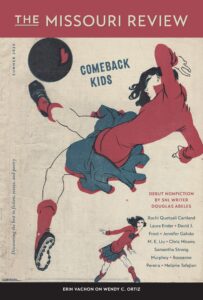 My essay about the psychological effects of denying free will—especially how, even if you know you don’t have it, it’s hard to believe you don’t—was just published by The Missouri Review, July 2026. It is titled “Sleepwalking Towards Bethlehem.”
I write about truths we know but do not believe
We know there’s a climate crisis, but we act as if we don’t believe there is. We know we will die, but we do not believe it moment to moment (unless your moments are characterized by preternatural terror). Also, we act like we do not really believe what we know when act against our better judgment, when we “know better” but do the wrong thing anyway—for example, in procrastination. Finally, some of us know we don’t have free will, but we have a hard time believing we don’t.
Subscribe to my Substack newsletter, Armchair Vertigo
Get behind the scenes commentary about the publishing process for my Missouri Review essay, plus weekly essays on truths we know but do not believe.
Armchair Vertigo is a newsletter of literary nonfiction, philosophy, psychology, memoir, and cultural criticism. Its central subject is the examined life under pressure: death, grief, self-deception, procrastination, moral responsibility, free will, happiness, and meaning. Click here to subscribe.

Excerpt from “Sleepwalking Towards Bethlehem,” my essay in The Missouri Review, July 2026:
My research into the psychological implications of free will denial would lead me to novel places on the intellectual landscape: to a confrontation with bodies of knowledge called “informational existential threats;” to the conceptual affinity between progressive political opinion and free will skepticism; to the idea of an Area 51 for anti-free will research; to the existence of brain scanning technology that can actually read the inner contents of your mind and can know what you are going to do before you know; and, finally, to a kind of mind control as real and unnerving as feline toxoplasmosis, which may or may not have contributed to the dissolution of my engagement to Kelly.
When I sat down in my office to start my research, the first thing I noticed about online pictures of Professor Robert Sapolsky was the compassionate twinkle in his eyes. Framed by long curly gray hair, and a gray Garibaldi beard, Sapolsky’s eyes sparkled like quartz in the Tolstoian rocky crag of his sun-wrinkled face. A specialist in neuroendocrinology, he’s spent thirty sunny summers in Africa studying simians. (Sorry! I couldn’t control myself.) Returning to the same troop of baboons each year, he’d observe their behavior, tranquilize them, and take blood samples.
Among many other of discoveries, Sapolsky found that baboons ranking low in the troop’s dominance hierarchy had chronically elevated levels of stress hormones (glucocorticoids) with concomitant negative effects on health, like hypertension, and on behavior, like an increase in isolated sulking and displacement aggression. Sapolsky estimates that nearly 50% of all violence among his troop of baboons is displacement aggression. Shit, as we know, flows downhill. “A high-ranking male loses a fight and so chases a subadult male, who promptly bites a female, who then lunges at an infant,” Sapolsky has written. The more a baboon displaces aggression after losing a fight for rank, Sapolsky says, the lower its glucocorticoid levels are when the good doctor, sans sunhat, tests its blood.


“He who would learn to fly one day must first learn to stand and walk and run and climb and dance; one cannot fly into flying”. —Nietzsche